
Australia’s hospitality industry continues to face a major workforce challenge, with the latest national shortage figures showing that finding qualified chefs and cooks remains difficult across the country.
The 2026 Occupation Shortage List (OSL), released by Jobs and Skills Australia (JSA) on 21 October 2026, shows that chefs, senior chefs and pastrycooks have moved from ‘regional shortage’ in 2025 to ‘national shortage’ in 2026.
Cooks also remain in national shortage, as they were in both 2024 and 2025.
For restaurants, cafés, hotels and other hospitality businesses, these findings reinforce what many employers have been experiencing: attracting and keeping skilled kitchen staff remains a significant challenge with impacts on productivity and customer service.
The national shortage assessment for chefs and cooks will be further impacted by reductions in skilled migration and has major implications for training and the long-term supply of hospitality workers.
What has changed for chefs and cooks?
The latest OSL highlights a clear shift in the shortage ratings for several key hospitality occupations.
| Occupation | 2025 | 2026 |
| Chef | Regional shortage | National shortage |
| Senior chef | Regional shortage | National shortage |
| Pastrycook | Regional shortage | National shortage |
| Cook | National shortage | National shortage |
The move to national shortage for chefs, senior chefs and pastrycooks is significant.
A regional shortage rating indicates that recruitment difficulties are concentrated in particular parts of Australia. A national shortage rating signals a more widespread challenge.
For hospitality employers, this puts renewed attention on the need for practical solutions that help businesses recruit, train and retain skilled workers.
Why this matters for skilled migration
Australia’s skilled migration system is one part of the broader response to workforce shortages.
The OSL provides evidence about where employers are struggling to find workers and helps inform government decisions about workforce policy, training and migration.
The bigger picture: Shortages are easing, but challenges remain
Across the Australian workforce, the latest results show some improvement. The 2026 OSL identifies 279 out of 1,021 assessed occupations, or 27%, as being in national shortage. This is down from 29% in 2025.
While this suggests that labour market pressures are easing overall, the hospitality results show that improvement is not being felt equally across every industry. For businesses already struggling to fill kitchen positions, the national shortage ratings underline the need for continued attention to the chef and cook workforce.
How SaCSA is working with hospitality
As the Jobs and Skills Council representing hospitality, tourism and other service and creative industries, Service and Creative Skills Australia (SaCSA) works with employers, workers, unions, training providers and government to better understand workforce challenges and develop practical responses.
A major focus is understanding why chef and cook shortages continue and what can be done to address them. Through the Culinary Careers: Exploring the Drivers of Chef and Cook Shortages project, SaCSA is examining the factors behind these ongoing shortages. This work sits alongside SaCSA’s broader engagement with the hospitality industry, including discussions about attracting people into culinary careers, improving training pathways and retaining experienced workers.
These issues were also central to SaCSA’s National Chef Workforce Action Plan Workshop, held on 14 September 2026 in Sydney. The workshop brought industry stakeholders together to consider practical approaches to attraction, retention and training, with a focus on strengthening Australia’s domestic chef and cook workforce.
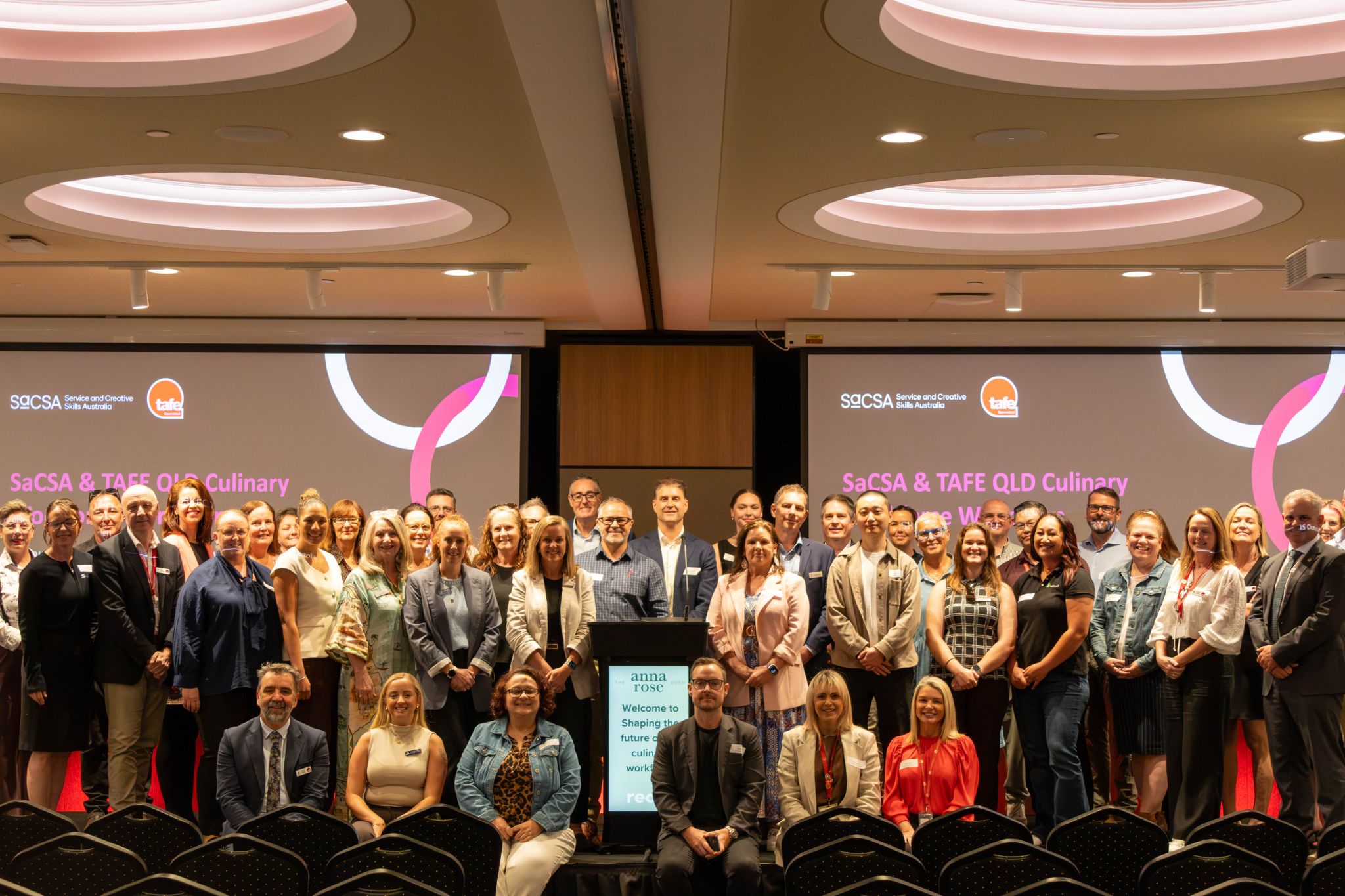
Further industry discussions took place on the Gold Coast, where SaCSA collaborated with TAFE Queensland to deliver the Shaping the Future of the Culinary Workforce Workshop. The workshop brought together industry representatives and educators to discuss challenges associated with transitioning from training into employment, strengthening apprenticeships and supporting career progression in the culinary industry.
SaCSA is also engaging with industry on the Review of Culinary qualifications, helping ensure training reflects the skills needed in contemporary commercial kitchens. The updated training products are expected to be endorsed by Skills Ministers in early 2027.
Together, these activities aim to support longer-term workforce solutions, rather than relying on recruitment alone.
Help shape the future hospitality workforce
The 2026 OSL is an important reminder that workforce shortages require more than one solution.
Skilled migration can help businesses access workers where they are needed. At the same time, strong training pathways, better career opportunities and improved retention are essential to building a sustainable local workforce.
SaCSA will continue working with hospitality employers and other industry stakeholders to understand these challenges and support practical, evidence-based responses.
Hospitality businesses and professionals are encouraged to share their workforce experiences and participate in SaCSA’s industry engagement activities.
To learn more about SaCSA’s hospitality work and current projects, visit SaCSA’s website.
For the full 2026 Occupation Shortage List and further information about the results, visit Jobs and Skills Australia.
For questions about the OSL data or methodology, contact JSA at OccupationShortageList@jobsandskills.gov.au.
Other Articles
Loading cards...