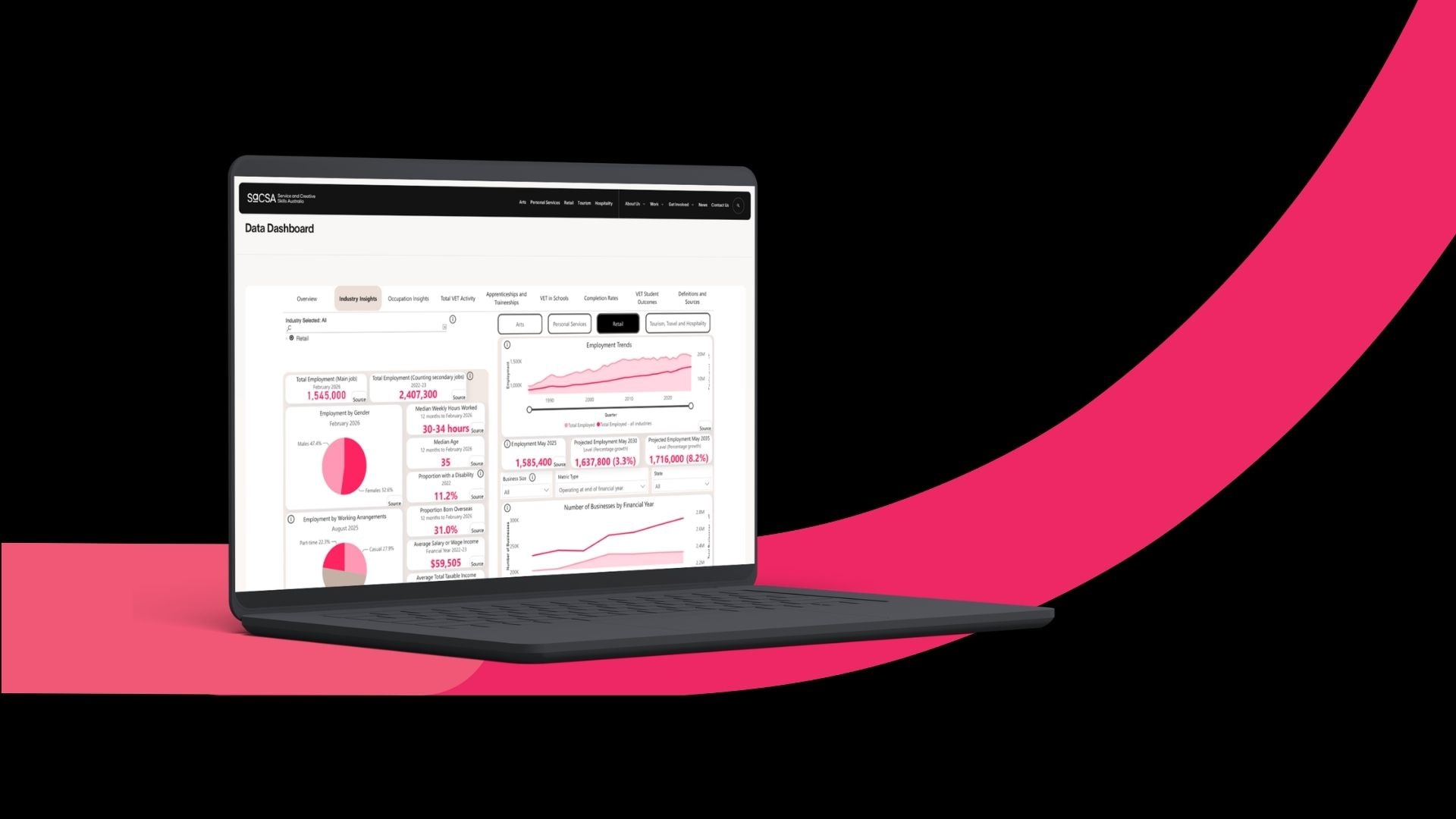
New dashboard insights show Australia’s small retail businesses are under increasing pressure as economic conditions continue to challenge business viability.
Dashboard Insight 1: Australia’s small retail businesses are shrinking
SaCSA’s Data Dashboard brings together trusted workforce and industry data to help employers, policymakers and stakeholders better understand the trends shaping Australia’s Arts, Personal Services, Retail, Tourism and Hospitality sectors.
One trend that currently stands out in Retail is that the number of small retail businesses has declined in recent years, raising important questions about business confidence, workforce growth and the future of Australia’s retail sector. This article explores what the dashboard reveals, why these trends are occurring and what they could mean for the future.
Small retail businesses play a vital role in local economies, providing employment opportunities, promoting competition and supporting local communities. They account for 44% of all retail businesses and 91% of retail businesses with employees.
However, many are facing increasingly difficult operating conditions, with higher interest rates, weaker consumer spending and ongoing cost pressures affecting business confidence and growth.
SaCSA’s Data Dashboard shows a notable decline in the number of small retail businesses in recent years, with the number of businesses falling by more than 10,000 or 9% from financial years 2020-21 to 2024-25 (Figure 1). New business entries have also fallen, from 12,700 (13% of total small retail businesses) in 2020-21 to 10,800 (11% of small retail businesses) in 2024-25.
These trends point to mounting pressures across the sector and raise important questions about the future of small retail businesses, employment and workforce growth.
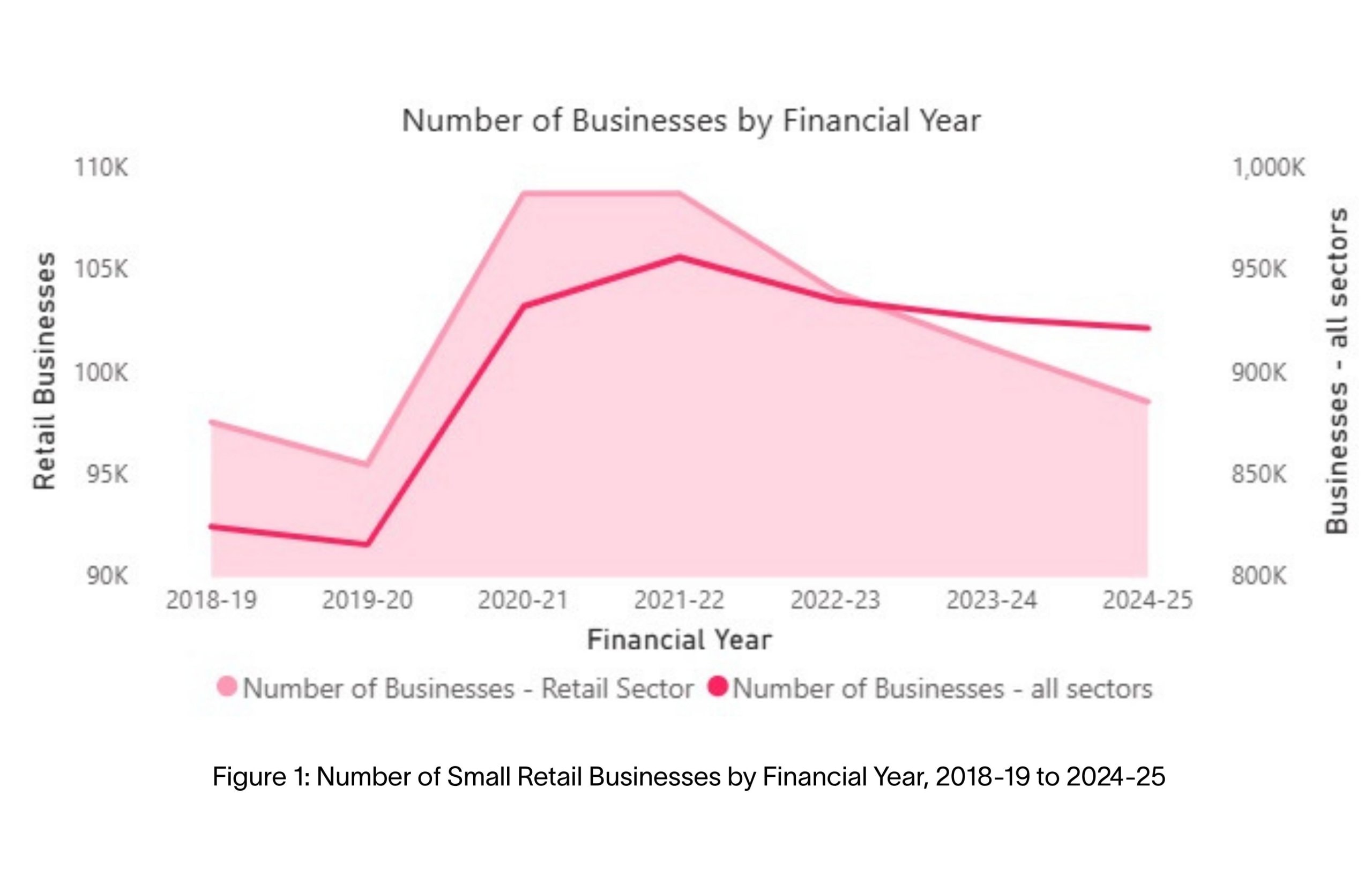
Source: ABS, Counts of Australian Businesses, including Entries and Exits, June 2025
These trends align with Reserve Bank of Australia (RBA) analysis showing that small business conditions remain weaker than those of larger firms, with Retail among the hardest-hit industries. This is contributing to slower workforce growth among small businesses in the sector.
This article examines the implications for the retail labour market and explores how current business conditions are reflected in SaCSA’s data dashboard.
What’s driving this trend?
Economic Conditions
Current trading conditions are affecting more than just business owners and operators. They also have direct implications for employment, working hours, training capacity and the ability of small retailers to plan for future workforce needs.
The official cash rate rose from 0.1% per annum in April 2022 to 4.25% per annum by June 2026. As illustrated in Figure 2, household savings, disposable income and spending per capita declined around the same time, reducing consumer spending and placing additional pressure on retail businesses.
These conditions have not affected all retailers equally. The RBA reports that small retailers have recorded weaker sales growth than large retailers since late 2022 according to Figure 3, suggesting that the recovery in consumer spending has been uneven across the sector.
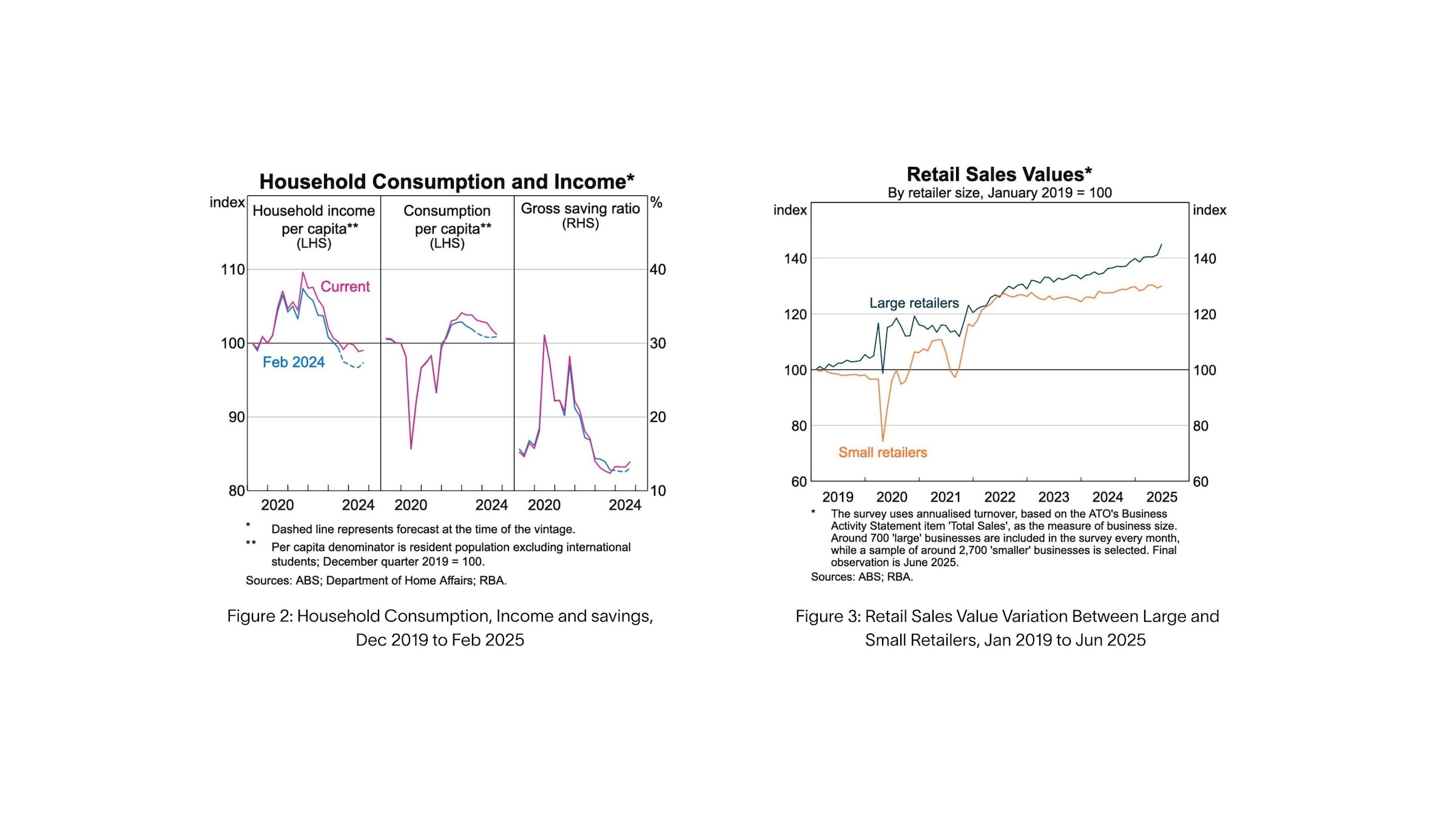
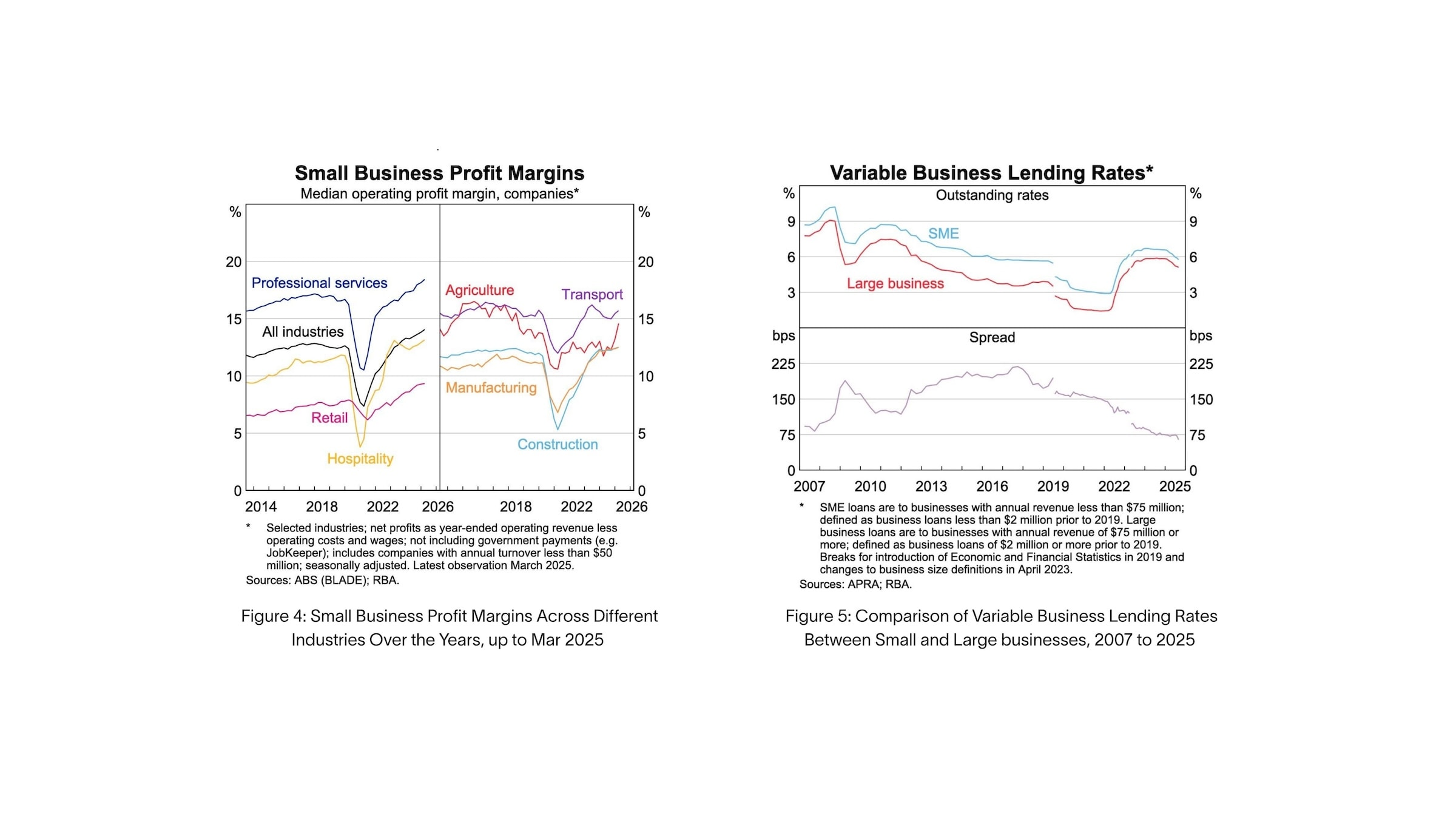
At the same time, Figure 4 illustrates that small retailers typically operate on lower profit margins than businesses in many other industries and often have limited capacity to pass rising costs on to customers. They also face greater challenges accessing finance, including higher borrowing costs than their larger counterparts and stricter lending requirements, as shown in Figure 5. These pressures have intensified in the current interest rate environment.
Together, these factors place increasing pressure on business viability. In response, many small retailers have adopted cost-saving measures, including reducing staffing levels or employee hours, according to insights from the Reserve Bank of Australia and industry stakeholders.
Dashboard Insight 2: Workforce growth is slowing
Small retailers play an important role in local economies, supporting employment, creating entry-level opportunities and contributing to community activity. Understanding the pressures they face helps explain how current economic conditions are affecting both business viability and workforce development.
The economic strain is limiting the ability of small retailers to grow their workforce. Employment growth has also been slower among smaller businesses. Between 2022–23 and 2024–25, employment in Retail and Wholesale businesses with fewer than 20 employees declined by 0.1%, compared with growth of 4.2% in medium-sized businesses (20–199 employees) and 2.4% in large businesses (200 or more employees).
Insights from the office for Small and Family Business South Australia also highlight that small retail businesses can face difficulties attracting and retaining staff, particularly when competing with larger employers for the same talent. These challenges can be even more pronounces in regional areas, where recruitment pools are smaller and access to training and education opportunities may be more limited.
The SaCSA Data Dashboard indicates that workforce growth in the Retail sector is expected to remain relatively subdued. The Retail workforce is projected to grow by 3.3% over the five years from May 2025 and by 8.2% over the following ten years. This is slower than projected growth across the broader workforce, which is expected to increase by 6.5% and 13.3% respectively, over the same timeframes.
Looking Ahead
Small retail businesses are under significant pressure, with challenging trading conditions also discouraging new entrants to the sector. Higher interest rates, weaker consumer spending and uneven sales growth have placed greater strain on small retailers than on larger businesses.
These pressures are affecting both business viability and workforce growth, as some retailers respond by reducing staffing levels or employee hours to manage rising costs.
While the recent pause in interest rate increases may provide some relief, ongoing monitoring will be important to understand whether conditions improve sufficiently to support business growth and workforce development. Given the important role small retailers play in employment and local economies, their recovery will be an important indicator of the retail sector’s future workforce capacity. Future updates to the SaCSA Data Dashboard will continue to track these trends, providing stakeholders with timely insights into business activity, employment and workforce performance across the Retail sector.
Explore the SaCSA Data Dashboard
The trends highlighted in this article represent just one example of the insights available through the SaCSA Data Dashboard.
Use the dashboard to explore:
- Business activity and industry performance
- Employment and workforce trends
- Occupations and labour market data
- Education and training activity
- Workforce demographics
- Trends across the Arts, Personal Services, Retail, Tourism and Hospitality sectors
Whether you’re an employer, policymaker, educator or researcher, the dashboard provides evidence-based insights to support workforce planning and informed decision-making.
Explore the SaCSA Data Dashboard Today
References
Internal Links
Data Dashboard – Service and Creative Skills Australia (SaCSA)
External Links
Small Business Economic and Financial Conditions | Bulletin – October 2025 | RBA
The Australian Economy and Financial Markets South Australia’s Small Business Strategy… | Small and Family Business
Australian Industry, 2024-25 financial year | Australian Bureau of Statistics
We encourage our stakeholders to delve deeper into these reports and strategies to understand their potential impact and leverage them in planning and decision-making. As always, we remain committed to supporting a vibrant and sustainable workforce across all industries.
Other Articles
Loading cards...